Showing posts with label muru witjira. Show all posts

Wednesday, 29 October 2014

A fatbike epiphany

'So when was your fatbike epiphany?'

I was asked this recently on a ride with a mate, I had to stop and think long and hard when the idea of a fatbike truly caught hold.

When I was about 6 or 7, I fondly remember going on family beach rides - I was on my bmx and mum and dad were on their old 28" roadsters. We'd all camp in the canvas tent at Miami, we'd ride on the hard sand till the sun went down, then head to the fisho for chips and a Chiko roll. Great times.

Fast forward to 2009, a local mtb club was doing its annual beach ride at North Straddie, we tagged along. Run what you brung.


After that trip, I started to put a lot more thought into this terrain. There was so much to explore, so much potential - but a standard mtb wasn't up to the task - and I wanted to go further with no limitations.

I had thought about getting some clunkers from a curbside cleanup, riding the absolute freckle out of them, then donating them back for metal recycling.


There were a couple of inherent faults with that plan:
  • I can't abuse bikes. I *thought* I might have been able to do it to a really, really cheap bike, but I just can't do it. I'd still find myself caring for it to the best of my abilities...and cheap bikes are notoriously hard to service - because you can't polish a turd.
  • I needed reliability. Regardless if I was doing local rides, or back country epics, I needed to have a bike that gets me there and back safely, with the utmost in reliability and knowing that it won't let me down. A cheap bike just couldn't deliver this peace of mind.
  • Fit for purpose. A cheap bike would not be specifically designed for what I wanted to do, and would have been a limitation and possibly a liability. I wanted to RIDE the bike, not have to push it everywhere due to some design limitation.
  • I like nice things. We aren't fish cleaners in Russia, so we in the western developed nations can afford nice things. We all work hard for our money, so why not enjoy our recreation with nice gear. Nice gear is also lighter, enabling me to ride more than push, and when I need to push it is easier to push. When I need to carry, it is lighter for me to carry...and so on.
  • We all know someone with the surname 'Jones'. At all costs, they must not have nicer stuff than you.
Early the following year, I headed back to the US for work training in Chicago. It was a very harsh winter, so I hired a bike and went for a ride. This was a pic of the bikepath along Lake Michigan near Oak St beach, the ice chunks had blown up from the lake. My affinity for snow and ice riding was growing from a tiny seed.


 A few days later, I was off to meet up with my buddy Dave in his hometown of Tucson, Arizona, for a spot of mtbing on the AZT and the desert trails.


I'd been reading up about this 'thing' called 'Iditabike', held up in Alaska. I asked Dave about it, he had some intel on the event - his main emphasis was that it was cold. Dave is part Hawaiian, so anything lower than 24C/88F was going to be cold.

The requirement for an extreme terrain bike was growing. The more I looked around, the more places I could see to ride a fatbike.

Again, I revisited my options of junkyard shitters and current fatbikes on the market. The purple Pugsley of the time didn't really appeal to me. I was hesitant to commit a lot of funds, as I was unsure of the usage rate and value for money, compared to mtbs of the time that seemed decades ahead in their development. Another few years ticked by.

The Moonlander changed all that. Suddenly, here was this beast of a bike with huge tyres, nimble handling, carrying capacity and all the features I was looking for. You can read more about that bike build HERE.


Also got a Pugsley for wifey, read more HERE and HERE.


So we committed and invested in quality fatbikes. I didn't quite know how much we'd ride them, but I knew the riding we did with them would be FAR more interesting (from an exploration point of view). After our first few rides, suddenly a lot of other riding we were doing seemed very 'vanilla', and the fatbiking was like cherry swirl with choc chip and double caramel.

We suddenly were expanding our horizons, into territories unexplored and always finding new places to go that previously were considered out of the capabilities of regular bikes. In essence, we could ride more stuff, more often, with more return on our investment.

We were also riding as a family, sharing the highs and lows of riding on varied terrains in all sorts of weather.


More of my mates are finding out for themselves the capabilities of the fatbike, not just for riding trail and beaches, but also for loading up and heading out for single and multi-day trips. The camaraderie of fatbikers is pretty cruisy - just out for fun.


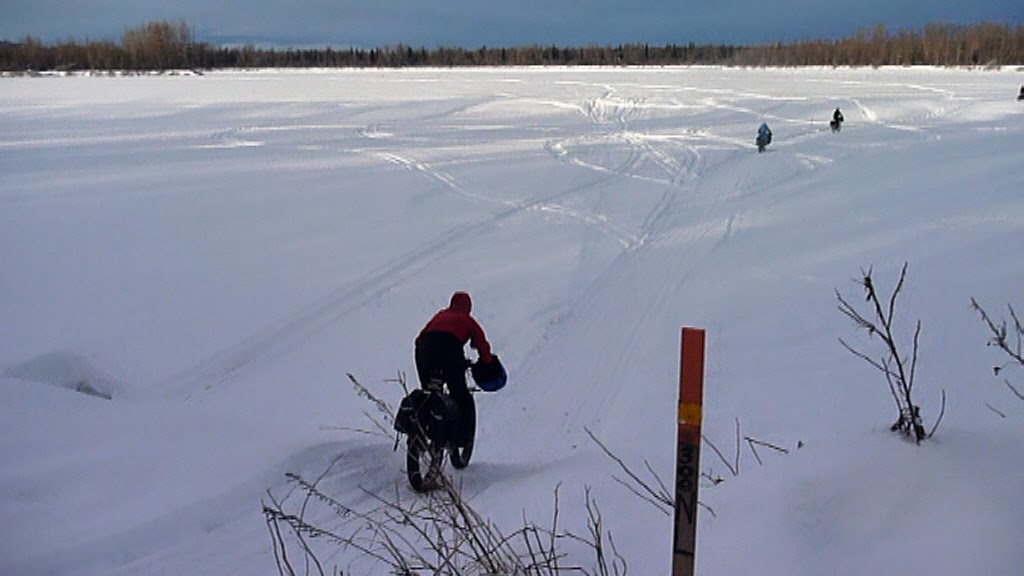
I qualified for the 'Iditarod Trail Invitational' in 2013, headed to Alaska and rode around a bit on a Muru titanium fatbike, bought for me by wifey as a birthday present.


After Alaska, I went on a bikepacking ride through Oregon.


I'll be heading back to Alaska in 2015 to race the 'short course' ITI. I'm also planning a crossing of the Simpson desert later in 2015.

We ride our bikes around many of the local islands, exploring and discovering those hidden gems to smash out an epic, or hang a hammock, relax and unwind. Some of the natural terrain form amazing playgrounds too, wind swept bowls and steep descents in the sandhills are a blast.

Fatbikes are not just about the beach life either. You'll see your local trails in a whole new light, many fatties are suspension ready and are a real game changer.


That's about it in a nutshell. Those that have fatbikes will concur, with roughly the same story.
Fatbikes are not a fad, you really need to ride one to make your own mind up - and not just around a carpark - get one on a marginal surface where mtbs have trouble, and you'll start to see the applications and your mind will soar with the possibilities.

So if you think you won't use it often, I'll tell you you're wrong, you'll use it more than your current bikes.

If you think you won't like it, I'll tell you that you will. It will make you feel like a kid again on a huge Tonka bike.

It WILL expand your riding boundaries.

So if you want to get there and back, have reliability, be the envy of your mates, ride some awesome places, and you're not a russian fish cleaner - buy yourself a quality brand fatbike, not a cheapy.

Ask yourself - would you buy an mtb from Aldi (knowing what you already know about mtbs) and do the same riding you are doing now, on that Aldi bike? ...I thought so.

I get asked a lot of questions about fatbikes - some rhetorical, but mostly serious. Build the relationship with your local fatbike specific shop - they will be THE number one accurate resource for information (don't believe everything you read on the internet ;) product and ongoing support - they live and breathe fatbikes. Real people, real advice backed up with real world experience. Support them with your purchases, they will help you get the most out of your fatbike investment.

The very first question you should be discussing with them is your application. Beach use? Trail? Expedition? Race? These and more should really be nutted out before anything else, there are so many fatbike options out there, your experienced fatbike shop will know these options and be able to advise the best one to suit.

Next up is component choice and suitability to the application. Again, with so many options, there are some components that just won't fit or be compatible with other components.

Be realistic with your budget too. Look at the current bikes you own as a guide - you've built them to a level that suits your riding style and requirements - you should be applying that same logic to your fatbike purchases. You'll save money by not leapfrogging from a cheapy to a quality fatbike in the long run.

Two key areas I focus on are the frame and the wheels. Spend money on a quality brand chassis - this is the foundation that determines the true performance of the bike. The manufacturer will have tested and refined the frame through a development crew or race team. Cheap chinese copies are exactly that, an external replica, but they can't copy the performance detail, build process, the testing regime (or warranty) of the original manufacturer. Quality wheels will significantly improve the handling, acceleration and performance. Invest well in these 2 prime facets of a fatbike, all other items are easily upgraded over time, the frame and wheels are your foundation.

Lastly, your experienced fatbike shop will know exactly how to maintain your bike, drawing from their own experience in prepping and overhauling key areas for longevity and performance, as well as advise on things you can do at home.

Fatbikes right now - it's like the Repack Rider revolution of the mid 70's. We are in the middle of the biggest range of options for the extreme terrain movement. We'll be talking about this fatbike revolution for decades to come!

Please, take my advice and use my experience to help refine your decision.

Amazing where riding a (fat)bike will take you!


Tuesday, 12 August 2014

Muru Witjira - a Summer conversion to Lefty


Winter.

Well, obviously.

A Northern hemisphere winter too. Regular readers here will know this from my sojourn to Alaska, featuring the awesome titanium Muru Witjira fatbike.


Winter.

Okay, not so obvious.

A winter in the southern hemisphere, at a latitude of 27.49 degrees S and 40m above MSL, is rarely one that brings with it precipitation requiring snow boots. More like a pair of thongs (or flip flops, jandals) Time to mod the bike for 'summer' mode in winter, which is like a summer.

In summery (not a typo), the titanium Swale fork is excellent as an expedition fork, but lacking in travel as a fun trail fork. I've long been a fan of Lefty forks - for reasons I'll explain soon - and I've had this project on the do list for some time.

The Lefty fork comes in many styles, with only a few suitable for a fatbike conversion. The upper needs to have non-bonded, removable clamps, the internals need to be re-jigged to suit the loading from a fatbike wheel and lastly the clamps and spacer kit need to be offset for a fatbike. This is the kind of techy project I love.


A kit like this gives me a LOT of scope for fine tuning and adjustment for handling performance. The front end of a fatbike has a lot more going than a regular bike, due to that fat tyre. For instance, when you turn that bar and corner, the tyre contact patch moves back and sideways off the centreline, changes the castor angle and increases the 'auto steer' - the bike oversteers into the corner and you have to fight the bars in the opposite direction to maintain line. Turn right, to go left, just like in the animated movie 'Cars'.

Fatbike 2.0 changes that, with frame geometries designed around specific fatbike suspension forks, Like the EYRE fork from Salted bikes, or the Rockshox Bluto. But for those of us with expedition geometry frames designed around rigid forks, installing a suspension fork can be a handling hit and miss affair if you don't know what you're doing. The travel on this fork has been set at 100mm, only a tiny bit longer overall in crown-to-axle length over the ti Swale fork.

My Witjira is a V1 - the first generation and it has expedition/overland geometry, ie no 'suspension correction'.


With the ti fork out, I leave the crown race installed so I can easily and quickly change forks to suit the purpose. A new crown race pressed onto the steerer on the clamp set and installed. A series of spacers packs out the top of the headtube, so the top clamp sits in the correct spot on the Lefty leg - there is a narrow range where the adaptor can clamp onto the Lefty upper.


Here the Lefty is installed in the adaptor clamps. For super long headtubes, there is a step down top clamp available. What I don't show in the geometry process is a complex series of measurements, detailed alogorithms, lasers and a kitten. What, you've never used a laser and a kitten?


The slotted brake adaptor mounts make wheel removal a simple affair, with zero loss of pad/rotor alignment.


The standard Lefty hub is fine for my purposes, light and strong, I was also able to use the same spoke length as the original Hope Fatsno hub.
 
 
Fine tune, change the rake, height check, measure, dish wheel, compress fork, measure, change the rake,  laser point the kitten - it was all a complex merry go-round with many on and off points to get it right.


A change in one place affects other key areas. One constant - the tyre must remain aligned along the central plane of the frame. Here is about 10-12mm of clearance of the tyre and the upper fork leg, the boot is much lower than the pic would have you believe, it is level with the rim.


I like my stems low, this is not an overly aggressive stem, only around -6 degrees, but still room for a more aggressive drop.


Seeing as this is the V1 Witjira, it has the straight downtube. The latest 'Trail' Vx versions of the frame have a modified downtube to allow for fork crown clearance. No problem though, I've used the OEM Lefty rubber bumper on the downtube to absorb any sharp knocks.


At full lock, 80 somethin' degrees.


Many people are unsure of the Lefty technology, either the missing leg scares them or the hocus pocus of the one sided hub just defies their understanding. The parts below are the critical difference between a Lefty and a regular twin stanchion fork - these are the linear bearings that make the Lefty suspension action so velvety smooth with very little friction. There are four sets of these, along with the wiper seal and rubber boot.


But all this theory is useless without a rigorous testing procedure, and arbitrary shots of the bike leaning on stuff.


The conversion has radically transformed the bike. I'm still bracketing my fork pressure, rebound and tyre pressures - but that's the fun part! I can see some very big days on this bike in prep for Iditarod, and this fork has added a significant amount of versatility, comfort and performance to an already accomplished bike.


Wednesday, 30 April 2014

Iditabike camp - day 4, with sleep debt knocking at the door...

I woke up feeling a little rougher than previous mornings. I am a morning person, ich trinke keinen Kaffee, relying on natural sleep rhythms (which is out of whack at the best of times) for the rising and the shining. The rising was early, but the shining wasn't so bright...


Classic breakfast - Clif bar, double Quaker oats, hot chocolate, peanut butter cups, Nutella chunks, some cheese and salami. Hehe, all the foods that can bung you up.


So many places to enjoy the sunrise from. This was the view from my bivvy spot:


...or through the picture window in Kurts cabin:


A daily duty is to check over the bike, routine maintenance etc but also provision for the day. Pogies have an amazing capacity to store stuff close at hand - like lollies. A handful in each side helps in more ways than just satisfying an energy need. I find when sleep deprived, if I keep my hands active I can fight off the sleepmonsters easier. However, add in a handwarmer to keep them tasty and edible...at ambient temps they closely resemble a doggy rawhide chew toy...


Today we were getting a later start from base. Plan was to head to back out to the Susitna river, ride up to Kroto slough and the confluence of the Skwentna river. The snow glittered like a billion diamonds.


It pays to adapt your tyre pressure to suit ground conditions. The same trail can change in a matter of hours, dependent on sunshine, temps, precipitation etc and there are a variety of key indicators - sound being one of them. At warmer temps (still below zero C) the snow can sound crunchy, but as the temps plummet, it starts to get squeaky under the tyres - the consistency changes too. A warm front may blow through and melt the surface slightly, then refreeze it into a thin ice crust, or the wind can mould and excavate it into hard sastrugi sculptures...

...or pillow it into marshmallow shapes...similar to when you loaded the dishwasher with washing up liquid and mums' kitchen filled with foam...

Kathi dropping in the Susitna river entrance.
Out on the river you could really feel the plunge in temperature. The humps are from broken surface ice slabs crumpled together, with snow filling in the gaps. Lots of crevices to lose footing into if you go off trail...


Will Meucke.


For a few of us from other times zones the time shift can play out in various ways. I was starting to feel the effects of sleep debt from the weeks preceding the trip - too many late nights and not enough time devoted to time-slipping my sleep patterns for the Alaska schedule.


By the time we got to Kroto slough, I was ready to sleep. It was about midday, and I was starting to hit a low point. The guys were discussing a run up to Skwentna roadhouse for a burger, all I wanted to do was curl up in a ball for a snooze. I had a gel and some food, put on all my gear for warmth and walked in circles around the group. Some headed for a burger, the rest of us headed back to find our own spot to bivvy for the night.


I enjoyed the marvellous sunset riding back along the river, then found a neat, isolated spot just off the trail on the sheltered side of a large tree. It was 4pm, I set the z-lite pad down and near instantly fell asleep for 20 mins.

The face of fatigue: the red rimmed eyes and general lethargic demeanor tries to break the core of your being. Fight those sleepmonsters.


I was surprised how the level of fatigue had risen so quickly, but being the last night you switch off the raceface a bit and relax - perhaps a bit too much. Dinner and cleanup done, I was asleep by 6pm. Alaska still had some more lessons for us all that night...

Thursday, 21 November 2013

Moreton Island fatbiking and fatpack - day 1

A mate (Wayne) and I planned a fatbiking trip to Moreton Island over Friday and Saturday, bikepack for the night...somewhere. Wayne had just picked up his new Moonlander and was keen for a trip, it was a fat virgin bikepacking trip for him.

Regular readers of this blog will recall the weeklong trip here, as well as day trips here with video.

We caught the Micat over, no issue fitting us on the barge, even with it at capacity with vehicles.


Was a bluebird day, the bay was a millpond.


It was officially 'Steve Irwin Day', I don't know if Wayne knew this, but he dressed the part. :)


Along the way north I paused a few times to check out the official campsites, with million dollar views west over the bay. I could never grow tired of that sparkling, emerald green ocean.


Apart from the odd vehicle, we had the beach to ourselves.


Heading north we kept passing a group of people we spoke to on the ferry. Wayne noted in their vehicle there were 5 blokes, a few cartons, but only 1 fishing rod. They had air conditioning, but I reckon we had the best view.


Our loose plan for today was to head north, then east, south, west, south again, and lastly east for about 10 metres. The only two reference points that mattered today were tide and sunset; as we meandered along the deserted west beach we both felt it - that melting away of everyday stresses - replaced by a relaxed and uncluttered state of mind. 


We stopped at Bulwer for a quick supply stop. Salt and vinegar chips for the sunset swim and entrée. The store is pretty well stocked and provides hot and cold meals - I've had the big brekky on previous trips and can vouch for the satiety afterwards.


We found a short segment of singletrack back to the beach, I spotted 2 Bush Stone Curlews parked up for the day, with one on the ground just out of frame. Traditional stories of the Curlew tell of them keeping bad spirits away, and bringing good luck and health.


 From here we rounded Comboyuro point and over Heath Island - which is an ever changing series of dunes and tidal/fresh water runoff lagoons, and past the towering Yellow Patch. I spotted many pairs of pied oyster catchers, sea eagles, terns and heard the trill call of whistling kites.


We made our way to North point, overlooking Honeymoon Bay. Time for a bit of smoko.


On bikepacking trips, food is fuel...but food for the mind, the body, or both? This was a laid back trip, so my food profile reflected this with time allocated to prepare, cook and enjoy... pfft yeah right. I'm a real Gordon Ramsay. So, I present couscous with noodle sachet and a piece of fruit cake. For the gear junkies - I'm using a Kovea Titanium stove and a 600mL Gram Counter ti pot set that allows the larger 230g gas canister, stove, cup and condiments baggy to nest neatly.


We watched the storms brewing over the mainland for a while - the cumulo-nimbus rising into giant anvils in the sky - we then headed along an inland track to the lighthouse. These tracks are a real mixture of textures - sometimes bottomless hot sand, sometimes bound together with woodchip, or firm due to sandstone base.


We headed up to the lighthouse, I portaged the bike up the stairs for this shot. I hope you appreciate it. A loaded Moonlander is not light...


 With the wind at our backs, it was a cruisy trip south to our next destination - Blue Lagoon.


A great location to refill the water bottles, a quick wash and just soak up the atmosphere. Blue Lagoon is a freshwater window lake - meaning the water table is exposed at land surface.The birdlife here is something to appreciate - with an abundance of fresh water, the plants are varied, providing for a broad ecosystem to flourish.


Middle Rd was our next obstacle - this road crosses the island in an east/west direction. Normally this is unrideable on the ascent, but the combination of recent rains and firm packed sand (the rangers regularly grade the trail to keep it trafficable for vehicles - this also aerates the sand, dries it out and removes organic matter that helps bind it together - and makes it a lot harder to ride on) made it fully rideable - first time ever for me as I've always had to walk the ascent.


The fast descent winds through cuttings of coloured sands and thickets of scented eucalypt - your senses are assaulted from many angles.


Back on the west coast, the extent of the storms on the mainland were revealed. We would be in for a good light show tonight.


We bivvied a few km south of Tangalooma at one of the bush camps. A quick rinse off in the water at sunset was a great time to reflect on the days' journey, and talk bloke stuff.


In the words of Bill Merchant 'never go to bed depleted'. Today wasn't a big day on the bike, but it was nice to have the time to create a wide range of food to enjoy - which you ordinarily don't have time for on ultra-rides. Dinner: bacon carbonara macaroni with lemongrass tuna; chicken noodle soup with with pre-made vegemite sandwich; salt and vinegar chips; muesli bar and fruitcake slab; and the pet monkey slipped in a Bounty bar for dessert - she says they're her favourite!


I had a bandicoot visit during dinner, and this big guy watched over my bike and gear as I slept.